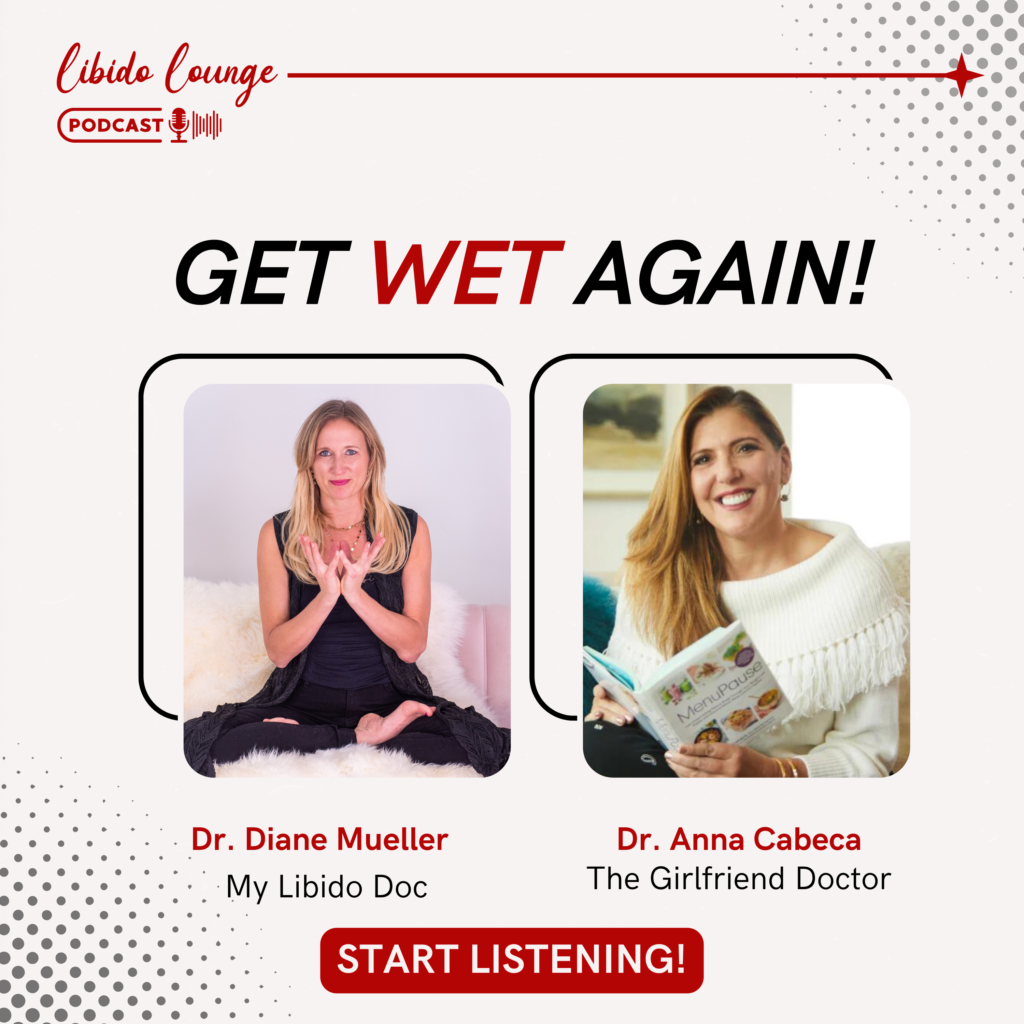
Hormonal issues causing you dryness “down there”?
Join us with OBGYN and Hormones Expert Dr. Anna Cabeca as we tackle hormones and how they impact everything we do from mood, to weight to sex life, and how through lifestyle, diet and mindset we can balance them in a way that we can live our best lives before, during, and after menopause. We also dive into celebrating our “second spring,” highlighting the cognitive and emotional renaissance that comes with these changes.
We cover:
- What happens to our hormones during perimenopause
- How hormones make a difference beyond our normal cycles
- Hormones affecting our vaginal and emotional health
- Preemptive measures if you’re just hitting your 30s
- How to be on top of your hormone health
- Why you should take good care of your erogenous zones
- What happens when the vagina gets drier than the Sahara
- Non-prescription products you can use
Stay classy and sexy. Slip into something comfortable, and listen to the episode now. 💖
✨ Try Julva for under $5 (+ FREE ebook!)
✨ 21-Day Libido Jumpstart Program: https://mylibidodoc.com/desired
About the Guest:
Dr. Anna Cabeca, DO, OBGYN, FACOG, is best selling author of The Hormone Fix and Keto-Green 16 and MenuPause. Dr. Anna is triple-board certified and a fellow of gynecology and obstetrics, integrative medicine, and anti-aging and regenerative medicine. She holds special certifications in functional medicine, sexual health, and bioidentical hormone replacement therapy. She lectures frequently on these topics throughout the world to large audiences and is known nationally as The Girlfriend Doctor and is host of The Girlfriend Doctor show. She has personally developed natural products to help women balance hormones and thrive through menopause including the highly acclaimed Julva® cream for the vulva and MightyMaca® Plus, a powerful superfood blend. She now lives in Dallas with her daughters, horses and dogs.
Table of Contents
Welcome to the Libido Lounge with Dr. Diane Mueller
Dr. Diane: Welcome to the Libido Lounge where we focus on all things love, lust, and libido. We believe that fabulous sex is just as important to health as exercise and good food!
Hey everybody, welcome back to another episode of the Lounge. I’m your libido expert Dr. Diane Mueller, and today I have such a treat for you all. This is going to be a really special conversation with none other than The Girlfriend Doctor—Dr. Anna Cabeca!
Why Hormones Are the Foundation of Healthy Libido
Dr. Diane: We’ve danced around this topic a lot, talking about different root causes of low libido. But today, we’re getting into the juicy details—the hormones. We absolutely need healthy hormone balance to have a healthy libido.
Dr. Anna: Oh my gosh, it’s wonderful to be here with you. Thanks for having me, Diane—such a pleasure!
Dr. Diane: Let’s start at the beginning. When we talk about hormones in this context, what exactly are we referring to?
Dr. Anna: I like to think of hormones as this vast network—there are hundreds in our body. The main ones tied to our libido and reproductive health include estrogen, progesterone, DHEA, and testosterone.
From our mid-30s onward, progesterone declines sharply, followed by estrogen. DHEA, a precursor to testosterone and estrogen, starts declining in our mid-to-late 20s, and by the time we’re in our 60s, testosterone can be down by 65–75% from our 20s.
Hormones and Brain Function: The Untold Connection
Dr. Diane: One of the things we forget about is the impact these hormones have on the brain—things like memory, cognition, even mood.
Dr. Anna: Yes! Our brains become less efficient at using glucose for energy as estrogen and progesterone drop. That affects memory, focus, even mood. PMS, perimenopause, and menopause are tied to neurological symptoms like brain fog, insomnia, mood swings, and memory loss.
The good news? When we shift our fuel source from glucose to ketones—by eating in ways that support mild ketosis—we often see a massive improvement in cognitive function, emotional stability, and even libido.
How Hormonal Changes Affect Vaginal and Emotional Health
Dr. Anna: These hormonal shifts also affect vaginal tissue—thinning, dryness, pain—and our emotional health. But we can do something about it! I’ve never met a patient I couldn’t help in some way.
Dr. Diane: That’s so empowering. Most women wait until hot flashes or weight gain hit in their 40s or 50s, but you’re saying we can start much earlier?
Dr. Anna: Absolutely. Your 30s are a great time to get baseline labs. Look at estrogen detox pathways, full thyroid panels, vitamin D levels—because these all tie into hormone receptor function. It’s never too early and never too late.
The Magic of DHEA and a Personal Product Favorite
Dr. Diane: Let’s talk more about DHEA and a product I personally love—Jolva. I keep it in every travel bag. It’s helped with vaginal pain, numbness, and dryness. My libido is strong and I credit Jolva for a lot of that. But I know some people get scared about hormones—especially topical use near the vulva. Can you speak to that?
Dr. Anna: Absolutely. Jolva is safe and made specifically for external use—from clitoris to anus. That’s the most important real estate of our body! As we age, the clitoris shrinks, the urethra thins, and the anus can develop fissures. This product helps keep the tissue healthy.
As a gynecologist, I’ve used DHEA in compounding since 1999. It’s incredibly safe, even for patients with a history of breast cancer. In fact, research from McGill University shows that vaginal DHEA use improves quality of life and reduces breast cancer mortality.
When I retired in 2015, patients begged me to keep my formulas available. So I created Jolva—non-prescription, with plant stem cells from the Alpine Rose. It’s clean, natural, and supports pelvic floor health, even if you have a male partner (unlike estrogen-based products which can transfer and cause issues for partners).
Understanding DHEA Lab Testing and Optimal Ranges
Dr. Diane: I’m so glad you brought up lab testing. Reference ranges are terrible. Women will come in with a DHEA-S level of 65 and be told it’s “fine.”
Dr. Anna: Right? That’s low. We want to see DHEA-S levels ideally in the 150–300 range. Over 100 at minimum. Many postmenopausal women are in the teens or 30s—that’s not optimal.
Blood testing should measure DHEA-S specifically. You can also look at saliva (for daily cortisol and DHEA rhythm) or urinary metabolites, depending on what you’re testing for.
And remember, standard lab ranges reflect average Americans—not optimal health. I always say: sit outside Walmart for an hour. Would you want your labs to be “normal” for that population?
The Power of Oxytocin in Hormone Balance
Dr. Diane: In our last few minutes, let’s touch on something we’ve talked about a lot on this show—oxytocin. It’s the love hormone, the orgasm hormone, the cuddle hormone. How does it fit into all of this?
Dr. Anna: Oxytocin is the head honcho. It’s the most powerful hormone in the body and the most alkalinizing. It supports immunity, happiness, long-term relationship health, and even longevity.
As estrogen and progesterone decline, our ability to make melatonin—and in turn, oxytocin—drops. That’s why sleep disruption often comes with lower connection, less joy, and diminished libido. So nurturing oxytocin production is vital.
Final Thoughts from Dr. Diane
Dr. Diane: This has been such an incredible conversation. Thank you so much, Dr. Anna, for all of your wisdom and your heart. I hope everyone listening feels empowered to check in on their hormones, support their sexual health, and advocate for themselves.
You can find me on YouTube, on Instagram, and check out our Modern Libido Club for so much more!
💖 Join our Masterclass: https://mylibidodoc.com/masterclass/
💖 Access Lab Testing: https://platinumself.circle.so/c/community
More Libido Lounge
✨ YouTube | youtube.com/@mylibidodoc
✨ Instagram | instagram.com/mylibidodoc/