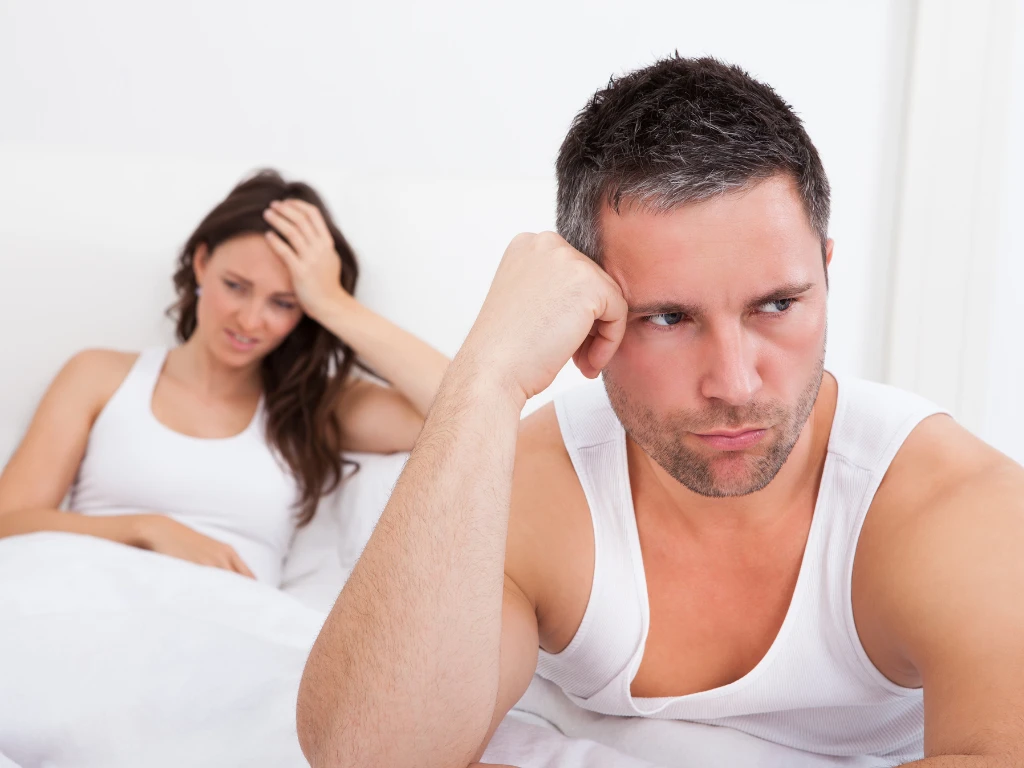
Sexual avoidance, is that what’s really happening in your relationship? If sex has started to feel tense, loaded, or strangely easy to dodge, the issue may not be low desire at all, and that distinction can change everything about how you fix it.
Key Takeaways
- Sexual avoidance involves steering clear of intimacy due to stress or emotional risk, not just low desire, making it vital to address underlying pressures rather than chasing libido alone.
- Recognizing signs like dread before intimacy, rehearsing excuses, and tension around affection can help differentiate sexual avoidance from low libido or loss of attraction.
- Addressing sexual avoidance requires reducing pressure, rebuilding trust, separating affection from sexual expectation, and identifying whether body, self, or relationship factors are blocking intimacy.
- Avoiding sex often stems from a complex mix of physical, emotional, and relational issues, including pain, shame, anxiety, unresolved hurt, or hormonal changes.
- A practical approach includes lowering pressure, increasing non-sexual touch, having honest conversations, and gradually reintroducing erotic connection without forcing outcomes.
- Professional help should be sought if sexual avoidance involves trauma, chronic resentment, complete emotional shutdown, or multiple overlapping factors like depression or hormonal shifts.
Table of Contents
What Is Sexual Avoidance?
Definition: Sexual avoidance is a pattern of moving away from sex or anything that might lead to it because intimacy feels stressful, pressured, or emotionally risky, not simply because desire is gone.
Dr. Diane says: “You’re not broken, you’re likely protecting yourself.”
A Plain-English Definition
Sexual avoidance means avoiding sex, touch, or situations that could turn sexual because they feel loaded. Part of you may still want closeness. But another part hits the brakes.
That’s what makes it different from simply being not in the mood. In long-term couples, especially over 40, this often shows up when pressure, resentment, pain, hormones, or exhaustion pile up like laundry on the chair, you keep meaning to deal with it, but it starts quietly taking over the room.
What Sexual Avoidance Can Look Like in Real Life
Sexual avoidance usually doesn’t announce itself with a trumpet blast. It slips in through habits.
Delaying Sex
You say, “Maybe later,” “This weekend,” or “After things calm down.” Once in a while, that’s normal. Repeatedly, it can become a pattern of postponing intimacy to reduce immediate stress.
Dodging Touch
A goodbye kiss gets shorter. Cuddling becomes strategic. You might avoid lingering contact because affection feels like the first domino before expected sex.
Going Numb During Initiation
Some people don’t feel disgust or anger, they feel blank. If your partner initiates and your body seems to freeze, shut down, or go emotionally offline, that can be avoidance, not indifference.
Picking Fights to Avoid Intimacy
This one can feel sneaky. A tiny irritation suddenly becomes a full kitchen debate at 10 p.m. The argument is real enough, but it also creates distance right when closeness might have happened.
Always Being “Too Tired” Because Sex Feels Loaded
Yes, fatigue is real. But sometimes “too tired” is carrying extra cargo: anxiety, pressure, body discomfort, or dread. If the emotional weight is the bigger issue, tiredness becomes the convenient coat hook you hang it on.
Sexual Avoidance vs Low Libido: What’s the Difference?
Many couples confuse sexual avoidance with low libido, loss of attraction, or a full sexless relationship. They can overlap, but they are not identical.
Issue | Core experience | Attraction may still exist? | Best starting point |
|---|---|---|---|
Sexual avoidance | Sex feels pressured, anxious, loaded, or risky | Yes | Reduce pressure and identify the blocker |
Low libido | Desire is reduced overall, often for biological reasons | Sometimes | Review hormones, medications, sleep, health |
Loss of attraction | Sexual pull toward partner feels diminished | Less often | Explore relational, erotic, and identity factors |
Low Desire Is Not Always Avoidance
Low libido is often more biological or physiological. Hormones, medications, chronic illness, sleep problems, and mood disorders can all turn desire down. Sources like Mayo Clinic and WebMD regularly note that medications and health changes can affect libido.
Avoidance Can Happen Even When Attraction Still Exists
This is the part many couples miss. You may love your partner, find them attractive, even miss the spark, and still avoid sex because your nervous system associates it with tension, pressure, or pain.
Why This Distinction Matters for Solving the Problem
If you treat avoidance like a simple libido problem, you may chase desire instead of removing what’s making sex feel unsafe or heavy.
When the Issue Is Mostly Biological
Think hormones, medication side effects, sleep debt, erectile changes, vaginal dryness, or menopause-related shifts.
When the Issue Is Mostly Anxiety or Pressure
Sex starts to feel like a performance review with no passing grade. The more pressure there is, the less room desire has to breathe.
When the Issue Is Mostly Relationship Damage
When unresolved hurt or resentment sits in the room, attraction often goes quiet. You can’t flirt well while emotionally wearing body armor.
Signs You May Be Avoiding Sex, Not Just “Not in the Mood”

Here are the most common signs of sexual avoidance:
- You feel dread before intimacy.
- You rehearse excuses in advance.
- Affection feels risky because it might lead to sex.
- You care about your partner but tense up around sexual connection.
You Feel Dread Before Intimacy
Instead of anticipation, you feel a knot in your stomach. Evening approaches and your body acts like it heard thunder in the distance.
You Rehearse Excuses in Advance
You’re already lining up reasons before your partner says a word: early meeting, sore back, too much on your mind. If you’re pre-planning exits, that’s a clue.
Affection Feels Risky Because It Might Lead to Sex
A hand on your waist should feel sweet. But if it feels like a slippery slope toward obligation, you may start avoiding affection itself.
You Care About Your Partner but Tense Up Around Sexual Connection
This is one of the clearest markers. You’re not cold. You’re conflicted.
Hidden Shame Signals
You feel self-conscious about your body, aging, erections, lubrication, orgasm, or performance. The lights feel too bright, even when they’re dim.
Hidden Resentment Signals
Irritation spikes fast. You withdraw emotionally. If this sounds familiar, the issue may connect to safety and libido, not just chemistry.
Hidden Pain Signals
If your body expects discomfort, avoidance makes sense. Pain trains the brain quickly: one bad experience can cast a long shadow.
Why Sexual Avoidance Happens
Sexual avoidance rarely has one neat cause. It’s usually a braid of physical, emotional, and relational factors.
Pressure and Repeated Rejection Cycles
One partner reaches. The other retreats. The pursuer tries harder. The withdrawer pulls back more. Before long, every bedtime interaction feels loaded.
Pain During Sex or Fear of Pain
If sex hurts, or used to hurt, your body remembers. That matters whether you’re dealing with dryness, pelvic tension, postpartum healing, or other forms of pain with sex.
Sexual Shame or Performance Anxiety
You may worry about taking too long, finishing too fast, not getting aroused quickly, or not looking “right.” Shame is a thief with soft footsteps: it steals desire without making much noise.
Stress, Burnout, and Nervous System Overload
When your nervous system is stuck in survival mode, erotic energy often flatlines. The CDC has long emphasized how stress and health burden affect overall wellness, and sexual wellbeing is part of that picture.
Resentment, Unresolved Hurt, and Emotional Disconnection
If your partner feels emotionally far away, sex can feel less like connection and more like another demand.
Sex That Has Become Routine, Performative, or Duty-Based
When sex feels scripted, dutiful, or mechanical, avoidance can become your mind’s rebellion.
Parenting Overload
After a day of logistics, caregiving, and noise, your body may crave silence more than seduction.
Menopause/Perimenopause Shifts
Hormonal changes can alter lubrication, comfort, sleep, mood, and desire. That doesn’t mean your erotic life is over. It means the old map may not fit the current terrain.
Medication Changes
Antidepressants, blood pressure medications, and other prescriptions can affect libido and arousal.
Postpartum and Body Trust Issues
For some women, especially after a difficult recovery or pain with sex after birth, the body doesn’t feel like a playful place yet.
The Sexual Avoidance Cycle: How It Reinforces Itself
Anticipation Becomes Tension
You start thinking about sex, and instead of curiosity, your chest tightens.
Tension Becomes Avoidance
To get relief, you delay, deflect, distract, or shut down.
Avoidance Creates Rejection
Your partner experiences distance, often as personal rejection.
Rejection Creates Pressure
The hurt partner may initiate more, ask more questions, or turn sex into a relationship referendum.
Pressure Makes Future Avoidance Worse
Now sex carries even more emotional weight than before.
What the High-Desire Partner Usually Feels
Rejected, confused, lonely, undesirable. Sometimes angry too.
What the Low-Desire/Avoiding Partner Usually Feels
Pressured, anxious, guilty, overwhelmed. Like they can’t win.
Why Both People Often Feel Alone
Each person misreads the other. One sees indifference. The other feels self-protection. This is how couples drift toward a dead bedroom or even a sexless marriage without fully understanding how they got there.
If both partners have quietly accepted the dry spell as the new normal, our blog on how to restart intimacy after a long dry spell is worth reading for couples who are ready to disrupt that pattern but aren’t sure how to take the first step without it feeling like a big deal.
What Sexual Avoidance Does NOT Automatically Mean
It Does Not Automatically Mean You Don’t Love Your Partner
You can deeply care for someone and still avoid sexual contact because it feels stressful.
It Does Not Automatically Mean the Relationship Is Over
Avoidance is often reversible once you reduce pressure and address the actual blocker.
It Does Not Automatically Mean There Is No Attraction Left
Attraction can be suppressed, buried under stress, pain, resentment, or fear. Buried isn’t always gone.
It Does Not Automatically Mean You Need to “Push Through”
Forcing sex usually backfires. It teaches your body that intimacy equals pressure, which deepens the pattern.
Dr. Diane says: “The goal isn’t to force desire on command. It’s to remove what’s making closeness feel unsafe, heavy, or costly.”
How to Start Breaking Sexual Avoidance Without Force

Name the Pattern Without Blame
Try: “I think we’re stuck in an avoidance cycle,” not “You always reject me.” Name the dance, not the villain.
Separate Affection From Immediate Expectation
Hold hands. Hug. Sit close during a movie. Kiss without escalation. This helps affection stop feeling like a trapdoor.
Remove Pressure Before Trying to Increase Frequency
For many couples, the fastest route back to desire is taking demand off the table first.
Identify Whether the Blocker Is Body, Self, or Relationship
You need the right target before you can choose the right fix.
Body-Based Blockers
Pain, hormones, sleep loss, erectile difficulties, medication effects, fatigue.
Self-Based Blockers
Shame, anxiety, body image distress, performance fears, old sexual scripts.
Relationship-Based Blockers
Conflict, emotional distance, unresolved betrayal, repeated pressure, or a chronic desire mismatch.
What Helps When the Avoidance Is Mostly Body-Based
Hormone and Medication Review
If libido changed sharply, review hormones and prescriptions with a qualified clinician. A doctor-driven process is often the most efficient path here.
Pain With Sex Evaluation
Pain should never be shrugged off as “just part of aging.” If there’s burning, dryness, pelvic pain, or fear of penetration, assess the physical cause directly.
Sleep, Stress, and Fatigue Load
Exhaustion can flatten desire and make touch feel like one more task. If you’re wondering why couples stop having sex, chronic fatigue is often hiding in plain sight.
Menopause and Postpartum Considerations
Perimenopause, menopause, and postpartum recovery can all affect comfort, body trust, and responsiveness. The answer is not shame. It’s support, evaluation, and adjusted expectations.
What Helps When the Avoidance Is Mostly Psychological or Emotional
Shame Reduction
Normalize what’s happening. Shame thrives in secrecy: it shrinks in honest language.
Safer Conversations
Pick a neutral moment, not the bedroom after a hard no. Speak from your own experience: “I’ve been feeling tense around intimacy,” lands better than accusation.
Better Initiation Patterns
Use clear, low-pressure invitations. Give room for a genuine yes, no, or not now. Consent is more erotic when it’s unmistakably free.
Rebuilding Trust After Repeated Pressure or Conflict
Trust returns in small deposits: consistent kindness, no scorekeeping, and keeping affection separate from demand. It’s less fireworks, more careful rewiring.
What the Other Partner Should Avoid Doing
Don’t Pursue Harder When Your Partner Is Shutting Down
More pressure rarely creates more openness. It usually creates better hiding.
Don’t Frame Sex as Proof of Love
When sex becomes the final exam for the relationship, anxiety shoots up.
Don’t Make Every Touch Feel Like a Test
If every back rub has a hidden agenda, safe touch disappears.
Don’t Reduce the Issue to One Villain
Avoidance patterns are usually co-created, even when one person feels them more strongly. That doesn’t erase responsibility. It does make repair more possible.
A 14-Day Reset for Couples Stuck in Sexual Avoidance
Days 1–3: Lower Pressure
Agree that intercourse and sexual performance are off the table for a few days. Breathe. Let the room cool down.
Days 4–7: Rebuild Non-Sexual Contact
Add affectionate touch with no agenda: hand on the shoulder, couch cuddling, a longer kiss, feet touching in bed.
Days 8–10: Honest Conversations
Talk about what sex has come to mean lately, pressure, grief, duty, fear, longing, without trying to solve it all in one sitting.
Days 11–14: Reintroduce Erotic Possibility
Invite play, flirtation, fantasy, or sensual time without forcing a finish line.
When to Pause
If anxiety spikes, your body shuts down, or conflict escalates, slow back down. Resetting is not failing.
When to Seek Professional Support
If pain, panic, deep resentment, or long-term shutdown are part of the story, outside guidance can save months or years of spinning.
When Sexual Avoidance Needs More Than DIY Help
- Pain, Trauma, or Panic Responses
These need specialized support, not grit. - Long-Term Resentment
If old hurts have hardened into chronic distance, guided repair is often necessary. - Complete Shutdown Around Intimacy
When even mild affection feels threatening, the pattern is likely entrenched. - Depression, Anxiety, Medication, or Hormone-Related Changes
If several layers are stacked at once, self-help alone may not be enough. Medical review and structured relationship support can work well together.
Best Next Steps on This Site
- If the Problem Is Desire Mismatch
If one of you wants sex more often than the other, start with the site’s guidance on desire mismatch.
- If the Problem Is Pain
If intimacy hurts, begin with support around pain with sex so you’re not trying to solve a physical problem with relationship advice alone. - If the Problem Is Emotional Safety
If the room feels emotionally tense before anything physical happens, focus on safety and libido. - If You Want a Step-by-Step Couple Framework
If your relationship has slipped toward a dead bedroom, a sexless relationship, or a sexless marriage, the best next step is a structured, doctor-driven approach that addresses body, mind, and relationship at the same time.
Ready to Break the Sexual Avoidance Cycle?
If this article felt uncomfortably accurate, you don’t need more theory, you need a clear path forward.
Start Here:
- 🔥 Join the Hot and Modern Monogamy Club (Free Trial)
→ Step-by-step guidance to rebuild desire without pressure or forcing it - ⚡ 4 Days to Hot Sex
→ Fast reset to break the avoidance + tension loop - 💡 Want to Want It
→ Designed for when desire feels shut down but not gone - 🧠 Take the Libido Quiz
→ Figure out if this is avoidance, low libido, or something else
Frequently Asked Questions
Sexual avoidance is a pattern where someone pulls away from sex or intimacy because it feels stressful, pressured, or emotionally loaded. It is not simply a lack of desire. Many people still care about their partner and may even feel attraction, but something about sex triggers tension, anxiety, or shutdown.
People avoid sex for many reasons, including pressure, past rejection cycles, pain during sex, stress, resentment, or emotional disconnection. It often develops as a form of self-protection. If sex feels like an obligation, risk, or source of tension, your mind and body will naturally start avoiding it.
No. Low libido means reduced sexual desire, often due to biological or hormonal factors. Sexual avoidance is behavioral and emotional. You may still have desire or attraction but avoid acting on it because sex feels overwhelming, pressured, or unsafe. The distinction matters because each requires a different approach.
Yes. Many relationships recover once the pressure-avoidance cycle is understood and addressed. The key is reducing pressure, rebuilding emotional safety, and identifying the real blockers. When sex stops feeling like a test or obligation, desire often returns gradually and more naturally for both partners.
Intimacy avoidance can come from anxiety, shame, pain, stress, resentment, or repeated negative experiences around sex. It can also be linked to relationship dynamics where one partner feels pressured and the other feels rejected. Over time, avoidance becomes a learned pattern that protects against discomfort or emotional risk.
References:
Dagostin Ferraz, S., Kuyunga, L., Rech, P., Rodrigues Uggioni, M. L., Rodrigues Candido, A. C., Santina Dagostin, V., Rosa Silva, F., Colonetti, T., Grande, A. J., & da Rosa, M. I. (2026). Sexual dysfunction associated with selective serotonin reuptake inhibitors in adults with depression: A systematic review and meta-analysis. European Journal of Clinical Pharmacology, 82, Article 82. https://doi.org/10.1007/s00228-026-04011-z
Papaefstathiou, E., Malliarou, M., Sarafis, P., & Kaitelidou, D. (2020). The impact of burnout and occupational stress on sexual function in both male and female individuals: A cross-sectional study. International Journal of Impotence Research, 32(5), 510–519. https://pubmed.ncbi.nlm.nih.gov/31243355/
Vowels, L. M., & Mark, K. P. (2020). Strategies for mitigating sexual desire discrepancy in relationships. Archives of Sexual Behavior, 49(3), 1017–1028. https://pmc.ncbi.nlm.nih.gov/articles/PMC7058563/