What if your low libido isn’t a hormone problem or lost attraction, but a nervous system wired in childhood that still doesn’t feel safe enough to want sex?
You’re lying next to your partner, exhausted from the day, and the gap between you feels heavier than the silence. One of you pushes for connection while the other pulls away, creating that familiar pursue-withdraw dance that kills desire faster than any busy schedule. In this episode, Dr. Diane Mueller breaks down how anxious and avoidant attachment styles hijack your sex drive, why responsive desire gets mistaken for “no spark,” and how those early subconscious patterns turn intimacy into a threat instead of a turn-on. She exposes the real stakes: the emotional disconnection, the shame spirals, and the slow erosion of a relationship when safety never gets restored in the bedroom.
This is a must-listen if you’re a woman in midlife watching desire disappear and wondering why reassurance, space, or “just try harder” never fixes it.
About Dr. Diane Mueller
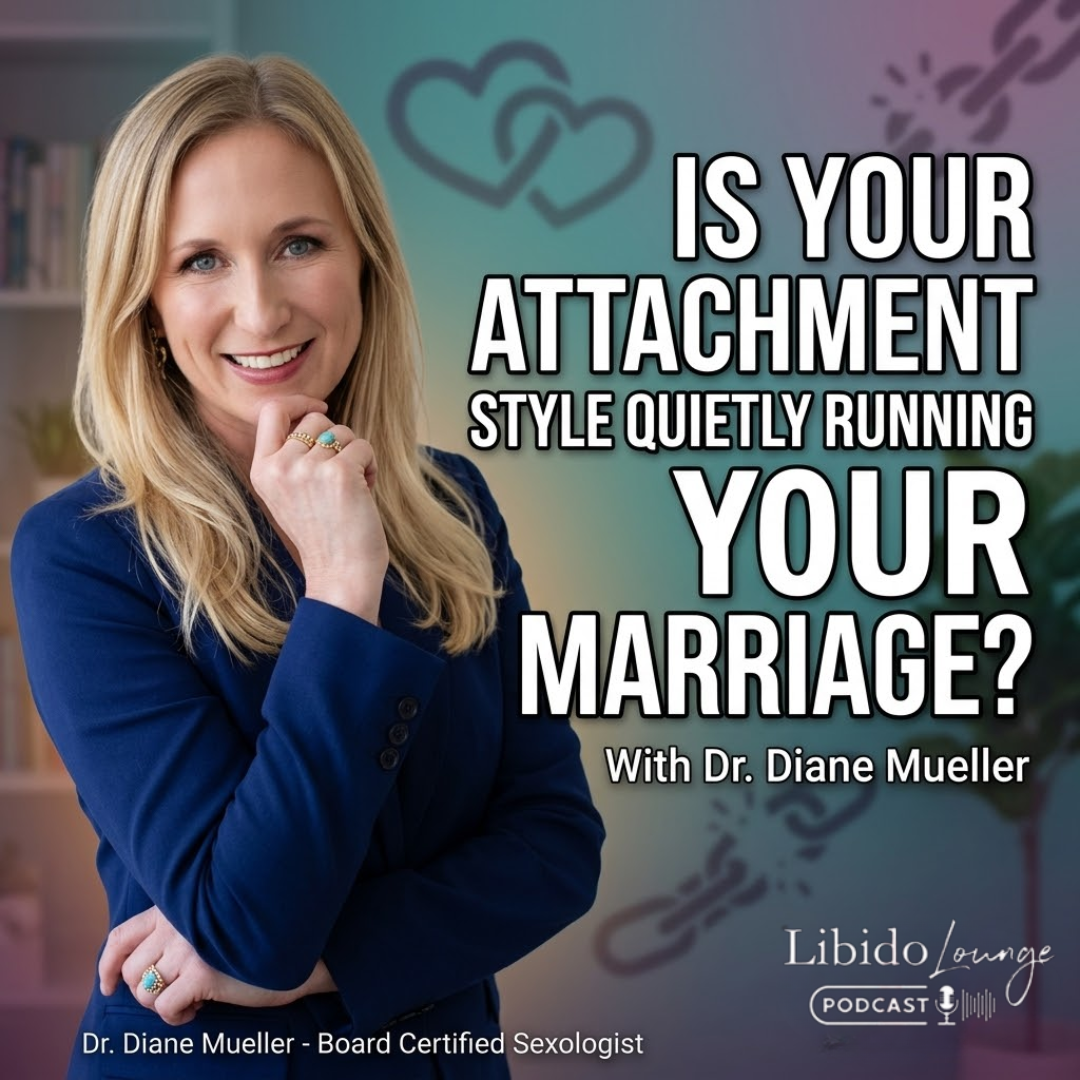
Dr. Diane Mueller, ND, DAOM, Board-Certified Sexologist, is the trusted guide for couples in long-term, monogamous relationships who feel like passionate lovers have turned into distant roommates—and are ready to change that.Through My Libido Doc, she helps partners rebuild desire, reignite hot, satisfying sex, deepen emotional connection, and restore intimacy—without relying on pills, awkward therapy sessions, pressure, or guilt. Drawing on her dual doctorates in Naturopathic Medicine and Acupuncture & Oriental Medicine Dr. Diane delivers science-backed, doctor-driven strategies that address the root causes: hormones, stress, communication breakdowns, life changes (like kids or menopause), and more. Whether one partner’s libido has crashed, conversations about sex feel impossible, or you’re both craving novelty and closeness again, she empowers you to transform your intimate life into something exciting, fulfilling, and deeply bonded—body, heart, and soul. Host of The Libido Lounge podcast, bestselling author, international speaker, and creator of online programs and trainings, Dr. Diane has guided countless couples worldwide to reclaim passion and make healthy libido the foundation of vibrant, holistic wellness. If you’re committed to your relationship and ready for more fire, she’s here to help you get there.
Table of Contents
Attachment Style and Low Libido: How Childhood Attachment Affects Intimacy, Anxious Attachment, Avoidant Relationships & Responsive Desire
Dr. Diane: Low desire is typically not what most people think it is. There’s more to the problem than just low testosterone. There’s also many other things that are driving low desire, including how childhood attachment affects intimacy. Things that happen in childhood set up our nervous systems. Our nervous system feels safe or not. Subconsciously, they’re driving behaviors. My desire needs safety to switch on and right now my nervous system doesn’t feel safe. The more we’re aware of them in our body, in our mind, what is happening, the easier it is to change and heal and repair these things.
Understanding Attachment Style and Low Libido
Dr. Diane: Hey everybody, welcome to another episode of the lounge. I’m really excited to continue some of last week’s conversation where we were talking about the Gottman’s four horsemen and the four biggest things that tend to cause a major rift and oftentimes divorce in a relationship. And we’re going to further this conversation by going into attachment theory and talking a little bit about what attachment theory is and in particular how attachment style and low libido connect, and how the psychological frame that we view the world from affects our sense of safety, our partners, and how our nervous system wiring relates to our desire and sexual intimacy.
This is really important because low desire is typically not what most people think it is. Like oftentimes people talk about hormones and circulation and absolutely they can play a big role in low desire. But it’s also really common that people go to their doctor, they get on testosterone replacement therapy and sometimes it fixes things and that’s great. But a lot of times I find that it is not fixing the problem and it’s because there’s more to the problem than just low testosterone.
So medically there can be reasons for low desire and we want to look at those things but there’s also many other things that are driving low desire, including anxious attachment and sex drive issues. Now sometimes people think it’s low attraction and that the attraction is lost and this is also possible but it’s a lot more rare than people think.
How Childhood Attachment Affects Intimacy
Dr. Diane: Attachment theory is super interesting in really looking at what happens to our nervous system from childhood. It’s basically things that happen in childhood that set up our nervous system so that our nervous system feels safe or not, especially in intimate relationships. Attachment theory was coined back in about the 1950s by John Bowlby. Mary Ainsworth expanded upon it with her studies observing how children responded when a caregiver left and returned.
The attachment styles are formed pretty early because it’s really about how our needs were met. And remember, we don’t remember a lot of these times. From like 0 to four, most of us have very few if any memories at all. And so all of these things then are programs around our needs that are really in us and in our neurological system subconsciously. They’re driving behaviors and they’re subconscious because they were formed so young.
The Four Attachment Styles and Their Impact on Relationships
Dr. Diane: Now there’s four ways our nervous system will handle closeness.
Secure Attachment
When somebody has a secure attachment style, they’re comfortable with closeness and dependence. They ask direct questions. When conflict comes up, a secure person is easily able to repair. They’re easily able to trust, receive feedback, and navigate both conflict and their intimate life very well.
Anxious Attachment and Sex Drive
Somebody that is anxious or preoccupied craves connection and tends to fear abandonment. This can trigger anxiety when needs aren’t met, like when flirting isn’t reciprocated. Reassurance calms an anxious person while distance sets them off. In the bedroom, the anxious attachment style often uses sex to restore closeness. If they’re not having sex regularly, it can feel like rejection. They might also struggle to voice their own pleasure.
Avoidant Attachment in Relationships
The avoidant dismissive style prioritizes independence. This person deals with stress by disappearing. Closeness can feel like pressure, so they back off. In bed, they equate emotional closeness with vulnerability and discomfort. Intimacy is rationed. They might avoid eye contact, lingering touch, or post-sex cuddling, showing up performatively but withdrawing intimately.
Disorganized Attachment
The disorganized style wants closeness and fears it at the same time. It can show up sometimes like anxious and other times like avoidant, creating a yo-yo effect.
Most people carry some pattern. Research shows many adults have a primary and secondary style. Even secure people can revert under high stress. These patterns often surface during life stressors like having kids.
The Pursue Withdraw Cycle in Relationships
Dr. Diane: Anxious and avoidant styles often pair together, creating the pursue withdraw cycle in relationships. The pursuer (often anxious) pushes harder for attention, touch, and intimacy while the avoidant withdraws more. This vicious loop pulls people further apart. Many mistake it for desire mismatch when it’s really a nervous system loop.
Responsive Desire vs Spontaneous Desire
Dr. Diane: Another key piece is understanding responsive desire vs spontaneous desire. Spontaneous desire hits out of the blue. Responsive desire grows out of closeness, safety, touch, and connection first—with arousal following. This is more common in long-term relationships, especially for women.
When insecurely attached, we sabotage responsive desire. The anxious partner panics over the lack of spontaneous spark and adds pressure that kills desire. The avoidant partner waits for spontaneity and withdraws. Low libido often means: my desire needs safety to switch on and right now my nervous system doesn’t feel safe.
Healing Attachment Wounds for Better Intimacy
Dr. Diane: These patterns are malleable thanks to neuroplasticity. Name what’s happening out loud using “I” statements. For example: “My anxious side’s feeling loud tonight. I really need a little reassurance. I’m not trying to pressure you.”
If you lean avoidant, practice offering small low-pressure connection like a 20-second hug or long-held glance with no agenda.
If you lean anxious, practice self-soothing first: “I am activated but I’m not in danger.” Then reach out from a calmer place.
These sound simple but they’re not easy because our nervous system has been wired for decades. The hardest things are often the least complicated.
Attachment is a big piece of the puzzle, but desire has many root causes—like pieces of a pie. Address as many as you can for the best results.
Dr. Diane: You can take my libido quiz at libidoquiz.com to help identify root causes. Check out my book Want to Want It for more on these personal root causes and how to harness your sexual energy. Links are below.
You can find me on YouTube, on Instagram, and check out our Modern Libido Club for so much more!

Want Part TWO of this Episode?
Each podcast interview includes Part ONE of the interview.
Join the Libido Club to unlock the complete conversation.
Our Advocacy:
Our advocacy is centered around providing a supportive space for women to reclaim sexual vitality and joy for good. Help us achieve this by subscribing to our podcast and sharing us with your friends and family.
 Ready for a Hot and More Modern Version of Monogamy?
Join the Club: https://mylibidodoc.com/club
Access Lab Testing: https://platinumself.circle.so/c/community
More Libido Lounge
 Website | mylibidodoc.com/podcasts/
YouTube | youtube.com/@mylibidodoc
Instagram |https://www.instagram.com/myromancedoc/
Facebook | https://www.facebook.com/myromancedoc
Health Store | https://store.mylibidodoc.com/