When marriage feels like a chore and you’re living more like roommates than lovers, the passion doesn’t vanish by accident—it starves from neglect.
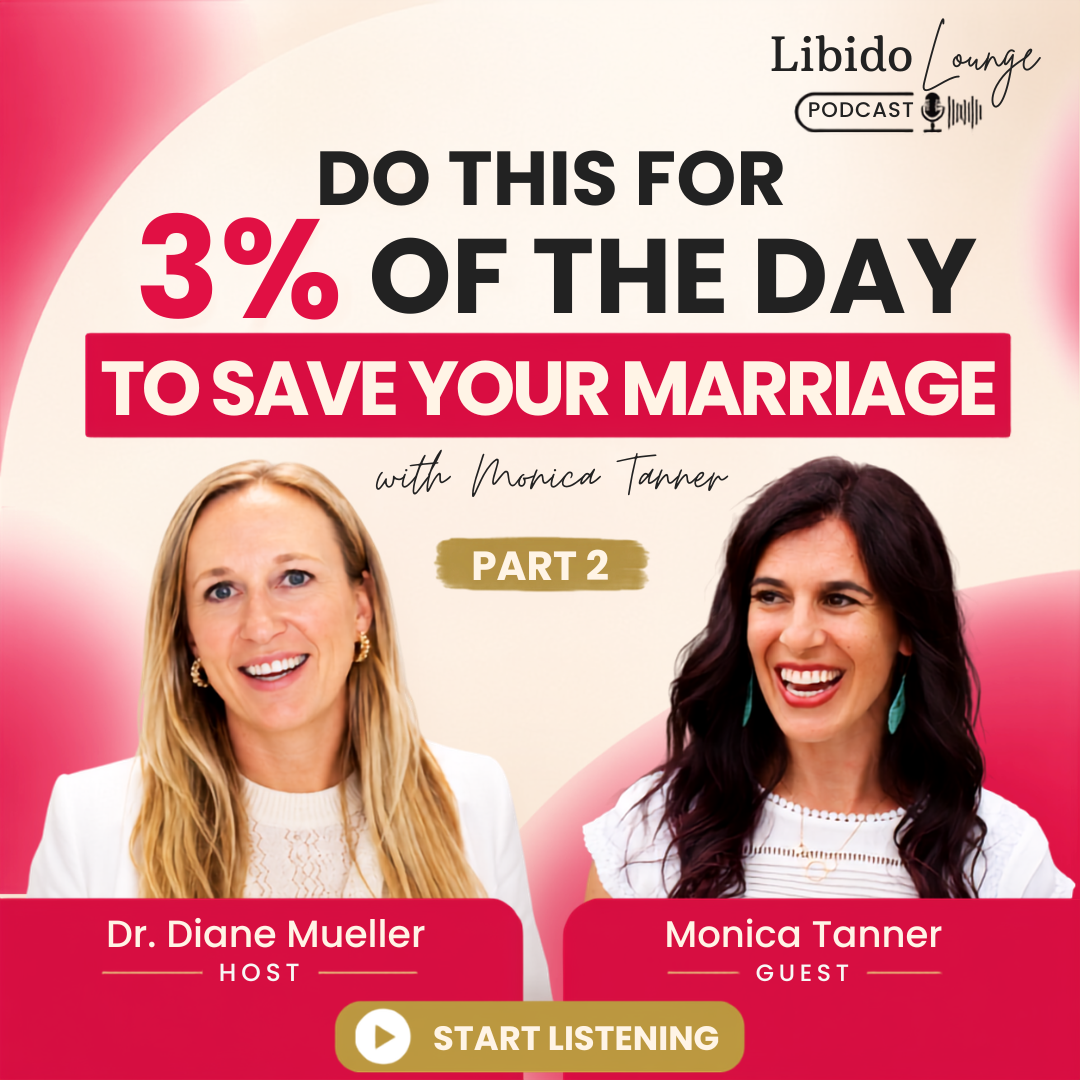
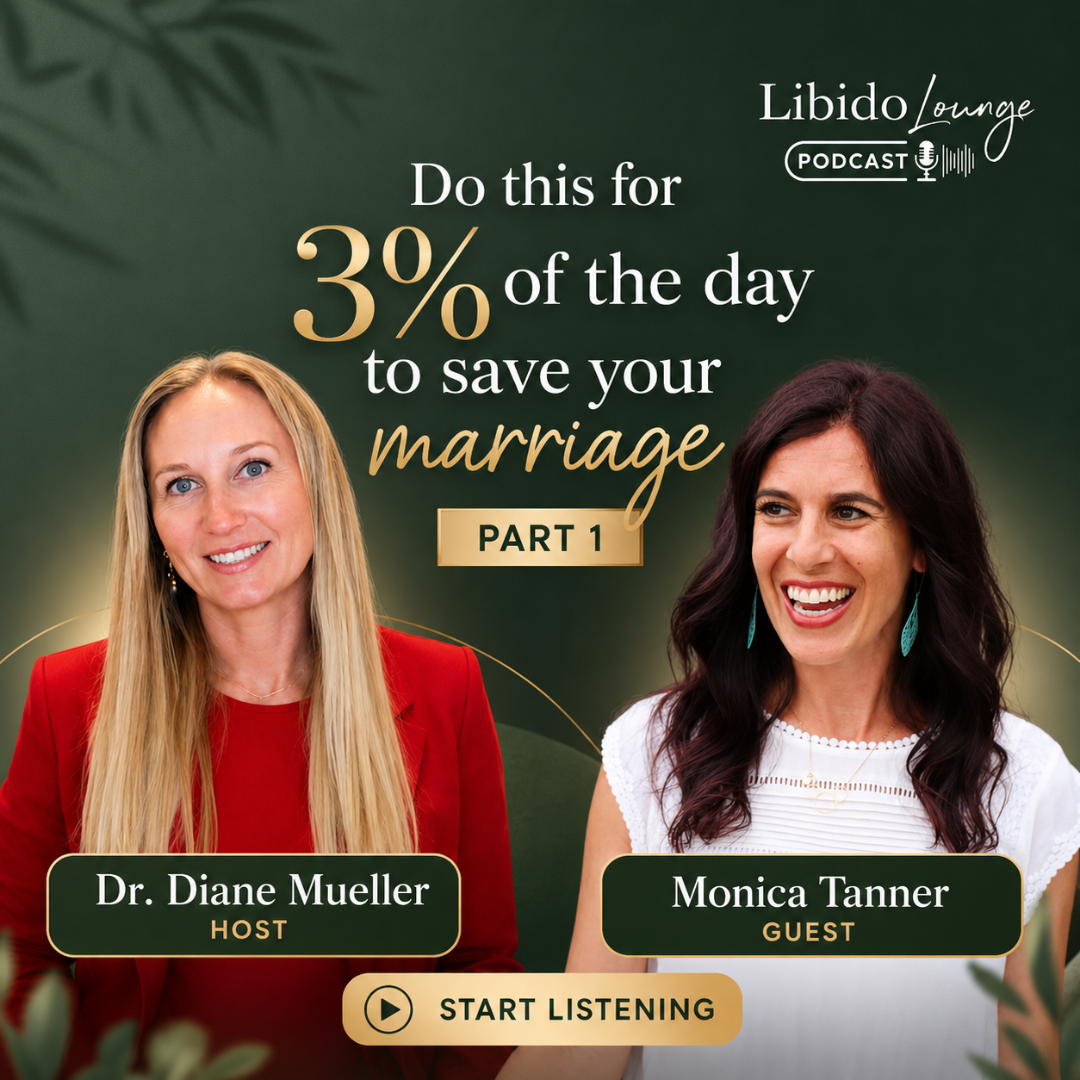
In this raw conversation, Dr. Diane Mueller sits down with relationship coach Monica Tanner to unpack roommate syndrome in marriage: how bills, careers, kids, and the endless grind slowly kill intentional connection until you’re just co-managing a life instead of sharing one. They dig into the 3% rule for couples—the surprisingly small daily and weekly investments that keep desire alive even in the busiest seasons—and treat resentment as a warning sign, that dashboard light telling you something needs attention before it burns out the engine of intimacy. You’ll hear exactly how to reconnect with your spouse through protected conversations, date night ideas for busy couples that don’t require elaborate plans or big budgets, and the skills that stop small frustrations from sinking the whole relationship.
You won’t want to miss this if you’ve ever looked across the dinner table and wondered when the spark got replaced by logistics.
About Monica Tanner
Monica Tanner, Relational Life Therapy Certified, Relationship Coach and host of the Secrets of Happily Ever After podcast, transforms marriages with simple communication, connection, conflict resolution and commitment strategies. Her mission is to lower the divorce rate and improve marital satisfaction. Through her engaging podcast, new Amazon Best-Selling book, Bad Marriage Advice, vibrant social media community, and couple’s coaching practice, Monica’s expert guidance has impacted thousands of couples, by helping them ditch resentment and roommate syndrome and get back to living their happily ever after love story. Website: https://monicatanner.com Instagram: https://instagram.com/monitalksmarriage 50 Connecting Questions to Ask Your Spouse – https://monicatanner.com/connect
Table of Contents
Roommate Syndrome in Marriage: When Marriage Feels Like a Chore
Dr. Diane: So, roommate syndrome. Now, a lot of people, I think, are going to recognize this phrase immediately and know exactly what we’re talking about. But before we talk about how to actually fix it, can you just kind of ground us, make sure we’re all on the same page, like what exactly is that and why does it happen?
Monica: Oh, great questions. Roommate syndrome is just very explanatory of what happens in long-term committed relationships because we start all hot and heavy. We can’t keep our hands off each other. We have these ideas of this incredible life we’re going to create together and then all of the sudden the bills and the mortgage and our careers and our kids and all of the responsibilities that come with building a life together start to fit in. And what most people do is they kind of divvy it out. I’ll do this part of it and you do this part of it. And they stop being really intentional about feeding that connection, that passion, that intimacy. They stop having hard conversations. They stop asking for the things that they want from each other. And they just start feeling disconnected. And that is what roommate syndrome is describing. It’s like we both put our heads down, we get the work of life done, and we don’t really make an intentional effort to connect while we’re doing it. And I think this happens like my professional observation is that this happens to like majority of couples unless they do something to stop it. Do you see that in your work as well?
Dr. Diane: A thousand percent. Because we’ve been fed the lie that love is enough and that if you love each other enough it’ll just happen. There’s also added on to it the other lie that there will be time for our relationship later, right? We’re locked in. We’re married for, you know, till death do us part. And so when the kids are grown or when we make this amount of money or when we’ve reached this level of success or whatever, there’ll be time to work on the relationship. And often that’s much much much too late. And so you have to nurture and care for that relationship throughout your life together, even in the busy seasons, which is going to feel never ending. I promise. And those busy seasons are so much better when you have a teammate to share it with. And so, you know, the reality is is that that passionate, intimate, loving relationship, it’s not going to happen by accident. And it’s not luck. It’s something that you intentionally choose to do every single moment of every single day.
Dr. Diane: So it sounds like then one of the things that you teach as far as what to do about it is largely probably like what I hear in that is a level of prioritization and saying like hey even in the busiest seasons of life which you know will span for decades for most of us. Even in the busiest seasons of life you are still making time. This person still has a special place. This person still gets attention, right? Is that is that what we’re saying here? And what beyond that really have you found to to help prevent or heal roommate syndrome?
The 3% Rule for Couples: How to Reconnect with Your Spouse
Monica: Yeah. So, two things here. The first one is I teach this principle called the 3% rule. This is going to blow your mind and I promise if you will do this intentionally, you will stay connected even in the busiest seasons. 3% is all I’m asking. So, here’s the cool thing about time. Time is the great equalizer. It doesn’t matter how much money you make, how important your friends are, how much you can bench press. We all get the same exact amount of time. Like, you can’t buy more time. You can’t barter for it. Legit, everybody gets 24 hours in a day. And so I’ve broken this down into less than 3% of your time will keep you connected throughout your life or throughout your marriage. Right? So 3% of your day is 20 minutes out of the 1440 minutes we all get.
Dr. Diane: Thank you. I was pulling out my calculator to do the math.
Monica: So yeah, do it. Do it. It’s so funny because I’ve been teaching this for a long time and I did a podcast where the host like loved numbers and he was like he’s like that’s 3%. I’m like what? Three percent you guys. So 20 minutes out of the 1440 minutes every single one of us gets in a day if you will commit to spending 20 minutes talking to your spouse. This can be first thing when you wake up in the morning. It can be after dinner. You can go for a walk. You can do it after you put the kids to bed. I mean, it’s literally 20 minutes. And you guard that time like tiger time. You do not bring your phones into that time. You don’t discuss logistics. This is a time where you get to know your spouse. The Gottmans call this love maps. So, it’s like really getting curious about what is your spouse learning about? What are they thinking about during the day? What gets them excited? What stresses them out? How can you support them in the things that they’re dreaming about or thinking about? You know, what books are you reading? Who are your friends that you really enjoy talking to? These types of questions where you really map your spouse’s mind. It takes 20 minutes and you can both get some good time in in that 20 minutes. So, and these are you offered a free gift to your listeners and we’ll tell you how to do that at the end. But this is where those 50 connecting questions really come into play. If you’ll ask one or two of these questions each day, it’s amazing what you’ll learn about your spouse. You could be married for decades and you still just didn’t know some of these things. And even if you at one point knew them, people change over time, right? So it’s like you could get a completely different answer in a couple of years than you have now. So these questions never ever expire. So 20 minutes a day.
Date Night Ideas for Busy Couples That Actually Work
Monica: You add on top of that three hours a week. We call this date night. People get really, you know, there’s tons of people who have made complete platforms over date night. So, you can there’s tons of creative different ways you can do date nights. They don’t have to be expensive, elaborate, or far from home. They just have to be intentional. My husband and I have a rule. Date night can slide around on the calendar. We have four children. We’re about to have a grandchild. So, life gets busy and sometimes the best laid plans, they get thwarted, but we never erase. So maybe somebody has a volleyball tournament that came up in the middle of date night and we have to move it around a little bit, but we never erase it. This is three hours of doing something fun with your partner. Get out, go for a walk, do a new find a new hobby to do together, find a new place to eat dinner, right? There are so many different ways that don’t have to be expensive or elaborate that are intentional where you go, I care enough about this relationship to carve out this time to be with you. So that’s 3 hours a week. We have 168 hours everybody in a week. So that leaves 165 hours to do whatever you need to do. Three of those hours need to be spent intentionally connecting with your partner. And this is where I say date nights should lead to a lot of physical, emotional intimacy. If you do it right and you do it on purpose. So this is a good time to do that. And then one week out of the 52 weeks in a year, you should get away. Again, it doesn’t have to be expensive, elaborate, or far from home. This is the time where you go, you make each other your priority. You make arrangements so that you don’t have to worry about the kids or your business or the money or anything like that. You get to dream together. You get to talk about what did this year look like for us? What do we want to keep doing more of? What do we want to explore in the next year? How are we doing on our 5 year, 10 year, 20 year plan? Right? This is really where you get sexy. You get, you know, for you forecast you plan. This is like these are the moments that for me I think about like what does it look like to grow old with my spouse? What’s it going to look like when it’s just the two of us after our kids are all grown and have their own lives and like it it’s a magical magical time of year. So, of course, anything you can add to that, more time is great, but I think only 3% of your time is required to stay connected throughout your marriage.
Dr. Diane: Yeah, I couldn’t agree more. And I think one of the things that happens so much is that we just think the longer we’re with somebody, the more we know them. And so, there’s an element where it’s like, well, I already know them. I already heard all their stories. You know, they tell the same five stories that are their favorite stories at every dinner party with every new person, right? And it’s so easy to just feel like we know them. And so we stop asking questions. And the more we don’t ask questions, the more we actually don’t know them so much anymore. And your freebie is so useful. My partner and I do this all the time. The questions thing and he like we had date night on Friday and one of the questions he asked me was if we were to both star together in a romcom, which romcom would be our, you know, the one we would do? And he chose Hitch and I chose Christmas at Vail and but you know the point is it’s like what it started was the conversation on why and the conversation on like okay well like where you know what does this say about our marriage what would be fun or all these types of things right? And it just, you know, my point is that it’s like all it takes is one question like that and like it didn’t it’s not like we were talking about that for the whole dinner that was maybe seven minutes of our dinner conversation. But what I find sometimes with these questions is when they trigger the initial conversation, it actually leads then to a whole different world of topics that you would have got into. So like you know your freebie of the 50 questions like in my mind is not just about the questions. It’s about starting conversations in a different way because then they open up this door of exploring the other person and getting to know the other person in a way that that you wouldn’t have otherwise. So, love everything you said.
Dr. Diane: I want to take a quick break from our episode to say that if you are finding that in your long-term relationships, things are just not as passionate, hot, or that you simply feel overwhelmed or do not have time to prioritize sex, you are not alone. It is so common that people start experiencing erectile dysfunction, vaginal dryness, boredom, just a lack of communication, or just a sheer not prioritizing intimacy, their love life, and more. That’s exactly why I created my hot monogamy society, where couples or individuals come to learn more about how to bring passion and aliveness back into their relationship. I want you to think about what you want your relationship to look like in the next decade or two or three. If you still make the same choices that you are making today in your relationship, are you going to reach those goals? If not, if you need support, that is what my society is for. You’ll find links about how to join in the show notes. It is completely private and you can join as a couple or as an individual to bring information back into your relationship. All found below in the show notes. Now, let’s get back to our episode.
Dr. Diane: Oh, I totally want to get to resentment, but I just want to respond to the because everything you said is right, but I also want to remind people that like even if you burn through all 50 questions, like let’s say you ask all 50 questions and you’re like, all right, what now? Can you imagine your answer to the what sitcom would we, you know, romantic comedy would we be would we star in in your 20s versus your 30s versus your 40s, right? These questions, they’re so good to like recycle them because your partner is changing all the time and it’s so fun to get like Esther Perel has this quote that she talks about all the time that most of us get most of us experience three or four great loves or marriages in our lifetime. Some of us to the same people, right? And so if you think about it, I there is no way I would answer those questions the same way 25 years ago as I would answer them now. And so yes, having those in your toolbox is amazing. Yes, super super helpful stuff for keeping things interesting in the relationship.
Resentment as a Warning Sign: Catch It Before Intimacy Dies
Dr. Diane: So let’s talk now if you would about resentment because I know that’s a theme in your work.
Monica: So I love this topic. Me too. Me too. And what you’ve seen like what ways like I think there’s like common ways that people think of right like the obvious things around somebody cheated or somebody didn’t keep their word or somebody lied like there’s you know from a standpoint of trauma there’s like the big T traumas that cause resentment but I think a lot of times we’re not talking as much as like the little t traumas right the things that are like you know what that’s not that big of a deal I’m just not going to bring it up so what do you see in your work from even like the little t traumas of the relationship as far as resentment like how does it build up? How do we prevent it? How do we clear it when you know when it happens? Can you kind of riff off some of that?
Monica: Yeah, absolutely. The first thing I would say about resentment is it has a big charge to it. Like the big R definitely. I used to say all the time resentment is where intimacy goes to die. Like as soon as you start feeling resentment, you no longer like really want to be get close to this person anymore. But resentment is everywhere. So I want to take the charge out of that word. It’s not a big scary word. Resentment is like an indicator light on the dashboard of your car. All it means is that something needs attention. But the longer you leave that light on, the more like expensive if you think about it this way, that maintenance is going to be. So if you go and get your oil changed the minute that indication light comes on, great. Like it’s an oil change. If you wait too long, your engine could start to like smoke, overheat, blow up. Like heaven forbid you don’t have any oil, you know, left and so your engine like burns out, right? Same thing with like the tires. Like if that indication light comes on and you’re like, oh my the tires need air, so let’s go put some air in the tire. That’s going to be a much easier fix than if you wait until your tire blows on the highway. Then you’re in a great deal of trouble, right? So if we think about resentment as just something in your marriage needs attention, maybe it’s time to have a hard conversation. Maybe it’s time to ask for something that you haven’t, you know, that maybe you feel you’ve been compromising or giving up or sacrificing. And so maybe it’s time to ask your partner to do something. I mean, resentment can start as small as you’re frustrated with the way your partner loads the toilet paper on the on the roll. It could be as big as, you know, not having rituals like kissing each other when you leave the house or I mean, it could it could indicate that there’s like full-blown disconnection. So, all I want you to do is think about resentment as a little indicator light on the dashboard. If you pay attention to it immediately, it’s going to be a lot less costly than if you leave it on for a very long time, ignore it, and let the problem just keep compounding. So, that’s the first thing I would teach about resentment. It really isn’t scary. It’s just like something needs attention. And if you feel it out and think about like what is missing, what am I actually looking for? Or what is there a need, a desire, something inside that I haven’t asked for or made clear to my partner? That’s where I would start. And then marriage is all about skills. So I would have you so here’s like we’ll do another like link to my book if you will. People love to say don’t sweat the small stuff. And I like to say absolutely sweat the small stuff. Address the small stuff skillfully before it becomes the big stuff. So just like I’m talking about if you’re feeling a small amount resentment in your life, let’s get the skills to deal with it skillfully before it sucks out all of the generosity and passion and intimacy and love that you’re feeling for your partner. So absolutely sweat the small stuff.
Dr. Diane: Yeah, I absolutely love that so much because like the analogy I often use is like the small stuff is almost like these little tiny holes in our love boat and one little like small hole like all right your boat’s probably going to be fine, right? Your love is going to probably be fine. But I think what happens is we have all these little like holes in the boat and it’s like this small thing here that we don’t mention and that small thing here and eventually we just have enough holes in our romantic love boat that the boat winds up sinking and you’re taking on too much water.
Monica: Yes. Correct. Exactly. Exactly. So I frame with that. Yes. It takes skills to patch up those little holes. And so a lot of times it’s like, how do I learn how to skillfully start a hard conversation? How do I learn how to skillfully ask for something I desire? How do I skillfully ask for support in finding some more me time or chasing a dream I’ve been thinking about or, you know, having a tough conversation about the annoying way in which you chew your food or leave your towels on the ground or whatever, right? So, like there’s so many. So, so yeah, if you just come in guns blazing like I’m pissed about this, you’re probably not going to get the same results as if you go, okay, resentment is leading me to this thing that I I guess I I maybe I’ve been sacrificing for a long time. My desire to go back to school and you know learn this thing and maybe start a business and how can I skillfully bring up to my partner that I would really like to explore this and I would love your support in doing so. I realize it’s going to ask more from our family from you know our resources whether financially or energetically or otherwise but I’d really like to give this a shot. Now, that’s a much more skillful way to address that and patch that hole in the boat so that you’re not taking on so much water waiting years and years and years to share this with your partner.
Dr. Diane: I love it and such good advice and I know we could talk all day, but I want to respect your time and remind our listeners that you can always work with Monica and we’re going to have information below on how to do that. Also, you can get her book which is called Bad Marriage Advice. And that is another way to continue this conversation and learn from Monica very easily. And then of course you have your freebie that you had mentioned, but please do mention it again if you would.
Monica: Yes. So, it’s 50 connecting conversation starters. So, really, it’s just like 50 of my favorite questions. Again, it’s like this idea of if you were given a million dollars today, how would you spend it? It’s just a really fun way to start a conversation and learn something about your spouse you might not have known before. And don’t get trapped into thinking that you already know the answer because I guarantee that my answer from 5 years ago is vastly different than if you asked me today. So, it’s just really fun ways to, you know, feel connected and and increase that emotional intimacy in your marriage.
Dr. Diane: Amazing. And we’ll have all of that in the show notes. Remember, as always, if you’re interested in joining us for additional expert guests and a year-long program on how to improve your marriage, you can join our hot monogamy club also below. And please do subscribe. We have more expert guests coming up. We have Dr. Jessica Higgins coming up soon. We’re going to talk with her a lot about conflict and how to resolve conflict in marriage. So, I do hope you will check out Monica and her free gift and all of her great work and her book. And thank you, Monica, for being here with me. And I will see you all again real soon.
Dr. Diane: Thank you for listening to the Libido Lounge. Please don’t keep me a secret. Please share this with your friends. You can find me on YouTube, on Instagram, and check out our Modern Libido Club for so much more!

Want Part TWO of this Episode?
Each podcast interview includes Part ONE of the interview.
Join the Libido Club to unlock the complete conversation.
Our Advocacy:
Our advocacy is centered around providing a supportive space for women to reclaim sexual vitality and joy for good. Help us achieve this by subscribing to our podcast and sharing us with your friends and family.
 Ready for a Hot and More Modern Version of Monogamy?
Join the Club: https://mylibidodoc.com/club
Access Lab Testing: https://platinumself.circle.so/c/community
More Libido Lounge
 Website | mylibidodoc.com/podcasts/
YouTube | youtube.com/@mylibidodoc
Instagram |https://www.instagram.com/myromancedoc/
Facebook | https://www.facebook.com/myromancedoc
Health Store | https://store.mylibidodoc.com/